

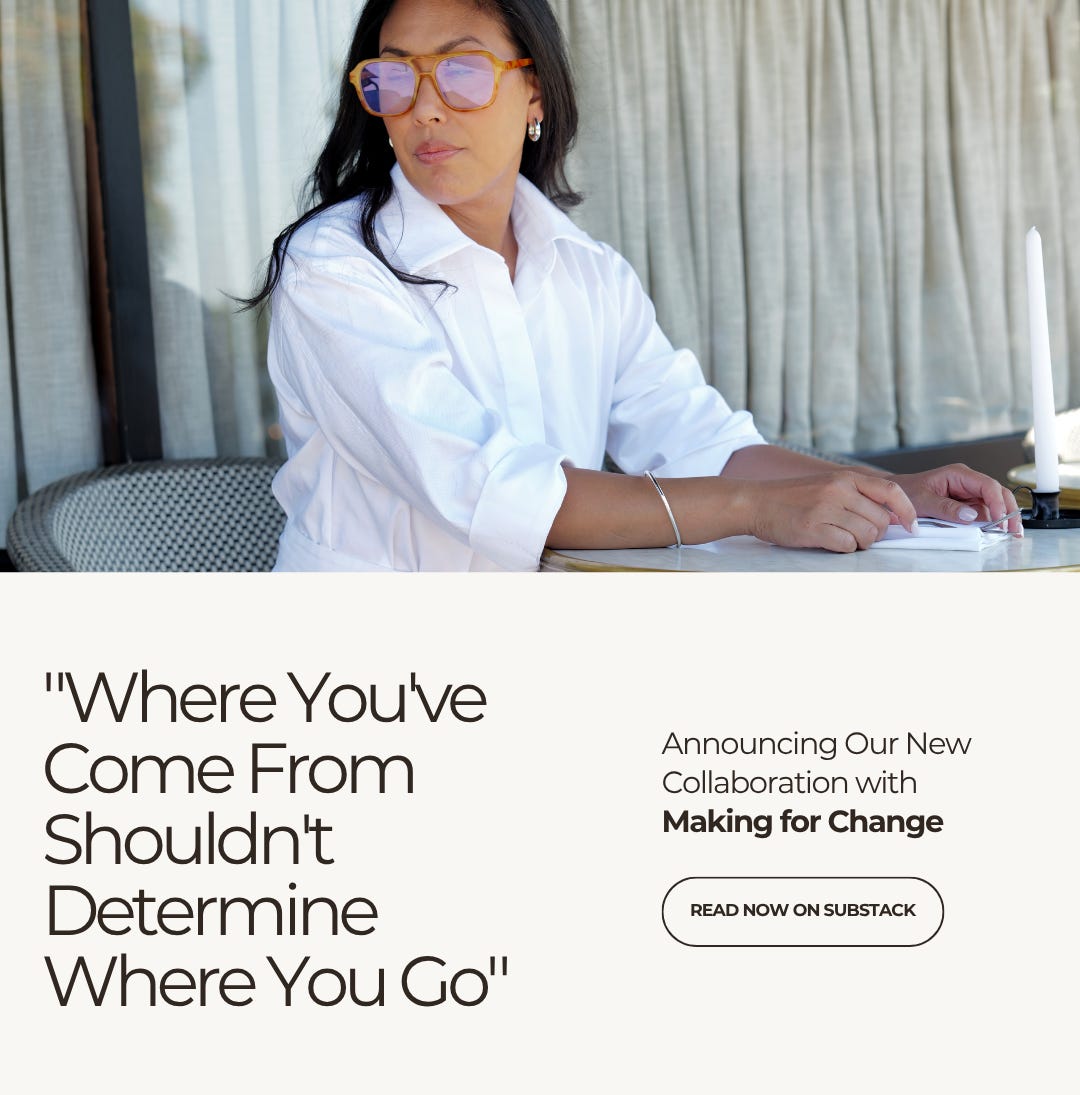
We are so happy to announce that The Female Archetypes is now partnered with Making for Change and will be producing our clothes at their Poplar Works in East London.
Making for Change is a programme that originated within The Portal Centre for Social Impact at London College of Fashion. Making for Change was established by the Ministry of Justice and London College of Fashion, UAL in a women’s prison in 2014: “The project aimed to increase well-being and reduce reoffending rates by equipping participants with professional skills and qualifications within a supportive environment. The programme is still operating in HMP Downview.” Making for Change’s vision is to use fashion and creativity to inspire and facilitate positive social change and social impact.
Beginning with our most recent Summer Collection, Making for Change’s team, consisting of their core production team and graduates from their training programs, will produce The Female Archetypes clothing in small batches right here in the heart of London, supporting the East London Fashion District.
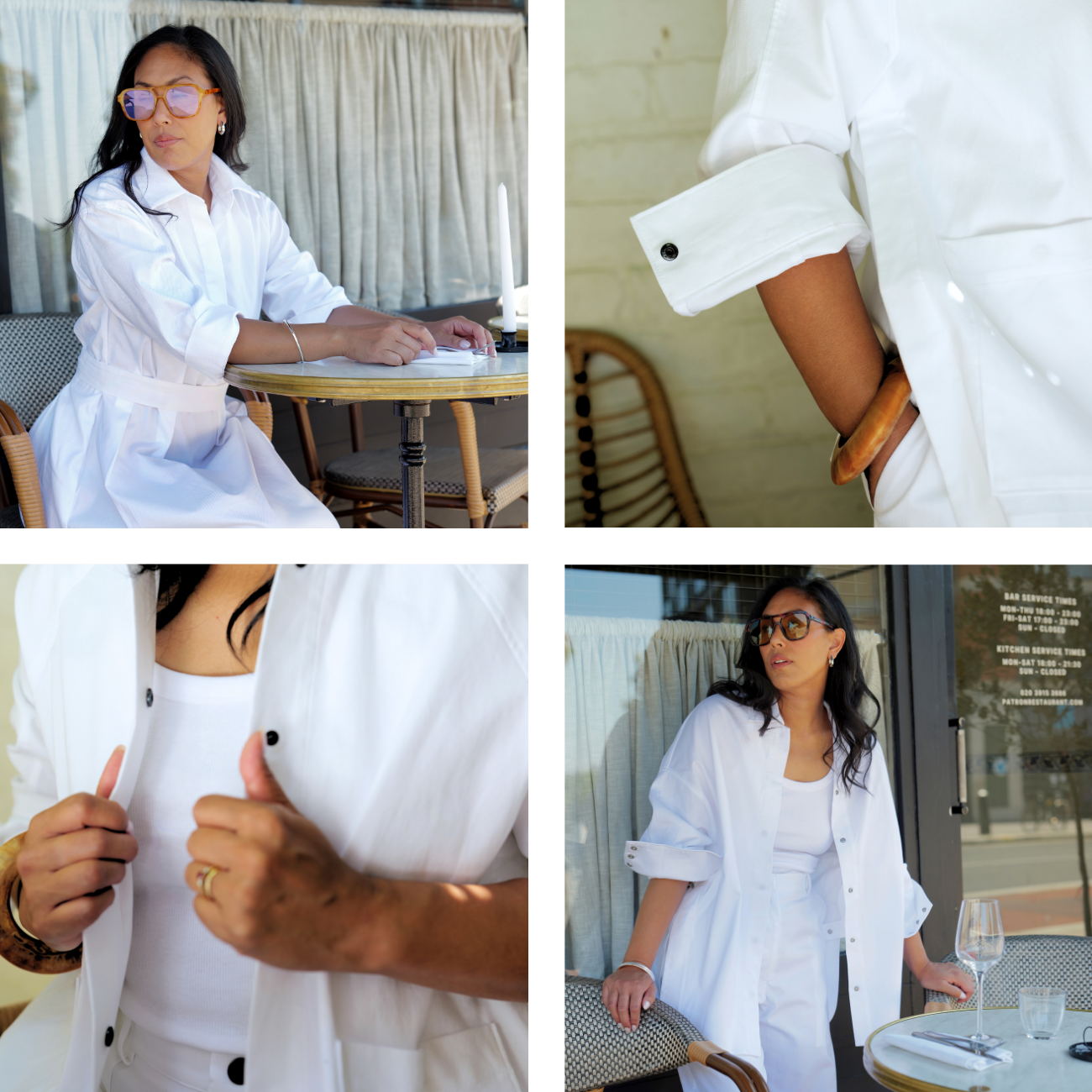
Our most recent SS26 collection
Alice’s motivation for this partnership
Our founder, Alice Holland-Lu, was invited along with and Anna Ellis, the Head of Business Development at Making for Change, on Shay Kaur Greval’s BBC Radio London show to announce this exciting new collaboration. When asked why it was important for Alice to partner with Making for Change, Alice gave a very frank and honest answer.
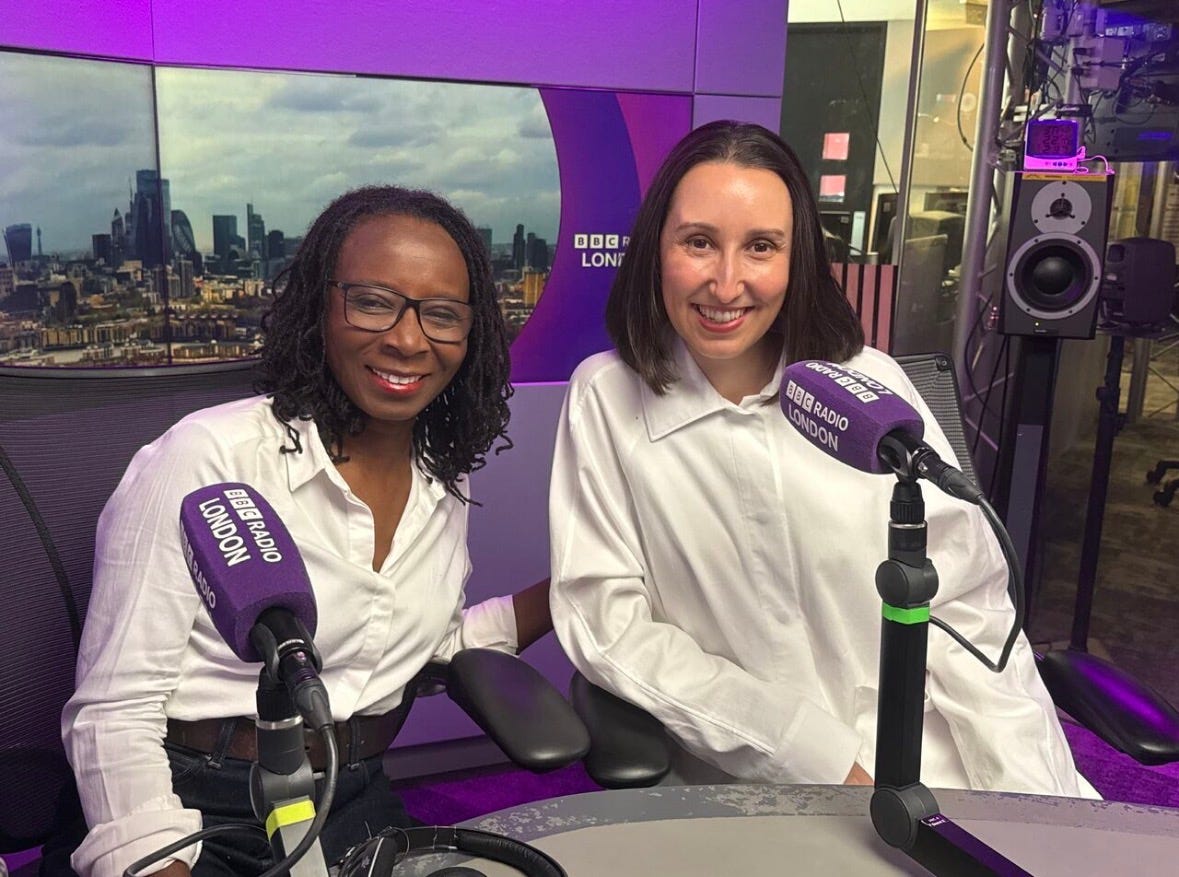
Anna Ellis (left) and Alice Holland-Lu (right) live at BBC Radio London
To Alice, this collaboration felt personal. She emphasised how important it is to her that The Female Archetypes offers flexible work and opportunities, especially for mothers, since her experience in the fashion industry was that she wasn’t afforded that flexibility. When she had her two children, she felt sidelined by her former employer. She still wanted to contribute to the economy and use her brain. While she expressed how much she loves her children, she said she knows she is a better mother when she’s out, interacting and creating. This is why she wants to create change and offer opportunities to mothers who want to work but need flexibility and part-time roles.
“And quite frankly, it doesn’t really matter if you’re using your brain at 3 o’clock in the morning when you’re breastfeeding. Really, sometimes it’s the best work because it’s quiet, you know?”
- Alice Holland-Lu
Alice even opened up about her experience with postnatal depression, admitting that she “almost didn’t make it.” She explained that this experience had a profound impact on her life and has made her much more empathetic about the fact that we all go through our own struggles and challenges.
“And sometimes these struggles are circumstantial. It’s not of our own making. So I think that wherever you’ve come from, it shouldn’t be a barrier to where you want to go.”
- Alice Holland-Lu
The Story behind Making for Change
As you can tell, Making for Change is not your typical manufacturer. In 2014, the project started as a manufacturing and training unit in a women’s prison. The idea behind the project was not only to teach skills, but to equip participants with a vocational qualification. This real-world practice, applied to real customers, rather than theory-based learning, gives these women the confidence to use their skills and work for other employers in the future.
Now, the project has extended to also serve other women “who may be coming from more challenged backgrounds,” as Anna puts it. Alongside the manufacturing units at the women’s prison, they have a manufacturing unit at Poplar Works in East London, which supports the East London Fashion District. Here, they have a similar setup: the women start with training, gain their vocational qualifications, and once they have graduated, they can be embedded in Making for Change’s core production team.
Here they can take their training and gain even more experience by making garments for designers, charities, startups and students, “a real breadth of garments”.
“We only work with clients, like Alice, who have the same ethos as us. You know, you’re not just making clothes. You have to be really passionate about who’s making them. Are they having fair wages? Are the conditions fair? How is it actually helping the people who work there? “
- Anna Ellis
On the one hand, Shay pointed out that it reduces the chance of women reoffending after prison, however, Anna sees the programme as more than that. What makes Making for Change different is the work with real clients. Anna described how important it is for participants to meet the clients they are manufacturing for and to understand the value these clients see in the results.
“I can’t really express properly how much of an impact it has had on some of the women who’ve come through the prison program, but also some of the women who’ve come through our East London communities, because they may be used to their role being traditionally in the home. So for them to be able to come out and know that they have this skill and they can create something amazing. And it’s not just a project, it’s something that’s then going to be valued and sold and worn.”
- Anna Ellis
Moving Forward
Alice put it perfectly in her interview: “This partnership feels like an extension of The Female Archetypes, to be completely honest.” And this is no exaggeration. Two organisations, built from completely different starting points, arrived at the same belief: that everyone deserves a real chance to turn their life around, and this is only possible if we give them the tools and the confidence to do so.
If you want to support this journey, have a look at our most recent Summer Collection, entirely made in Poplar Works and learn more about Making for Change’s mission and work here.
Follow the journey: Instagram, Youtube, Tiktok, Linkedin
Written by Jasmine Niblett, 6th August 2026