

At the end of last year, a social media trend was making the rounds that I’m sure none of us could escape: the Billy Joel / Fleetwood Mac mashup. While I’m fairly certain it ruined “Piano Man” and “Silver Springs” for many of us, I did appreciate the message behind it. Some users were sharing stories of how they took a leap of faith and met the love of their life, while others moved to a different continent and built a new life. For our founder Alice, the trend reminded her of one of the most important lessons she’d learned while building her brand: sometimes you have to stop listening and start trusting your instincts.
The Fashion Industry in The Early 2010s
Alice started working in the fashion industry in 2010. She worked her way up from the shop floor to assistant buyer, to account manager, all the way to being a director and now the owner of her own company. Whilst she says she met many amazing people and loved the path she took to get to where she is now, these times were not easy for a young woman’s self-esteem: Pre-body-positivity-movement, size 8 women were being labelled fat left and right, Renée Zellweger, Jennifer Lawrence and Jessica Simpson were making headlines for their “overweight” bodies. You just have to watch 2006’s “The Devil Wears Prada” to get an idea of what it must have been like working in the fashion industry at this time, with Anne Hathaway being described as “the smart, fat girl.”

Needless to say, the fashion industry had long normalised the idea that women must either remain a size 0 forever or constantly buy new clothes to fit their bodies. Garments simply couldn’t fit women through their body’s changes. Weight gain, pregnancy, postpartum bodies, menopause, all of it, required constant replacement. Of course, this was driven by ever-rising consumerism; fashion companies profit off consumers’ need to constantly chase the next new thing and buy into every trend that is perpetuated.
A New Era
But Alice never quite believed that was the only way.
At first, it was only a thought in the back of her mind. However, when she got pregnant and experienced first-hand how life-changing postpartum can be, she decided she would take matters into her own hands.
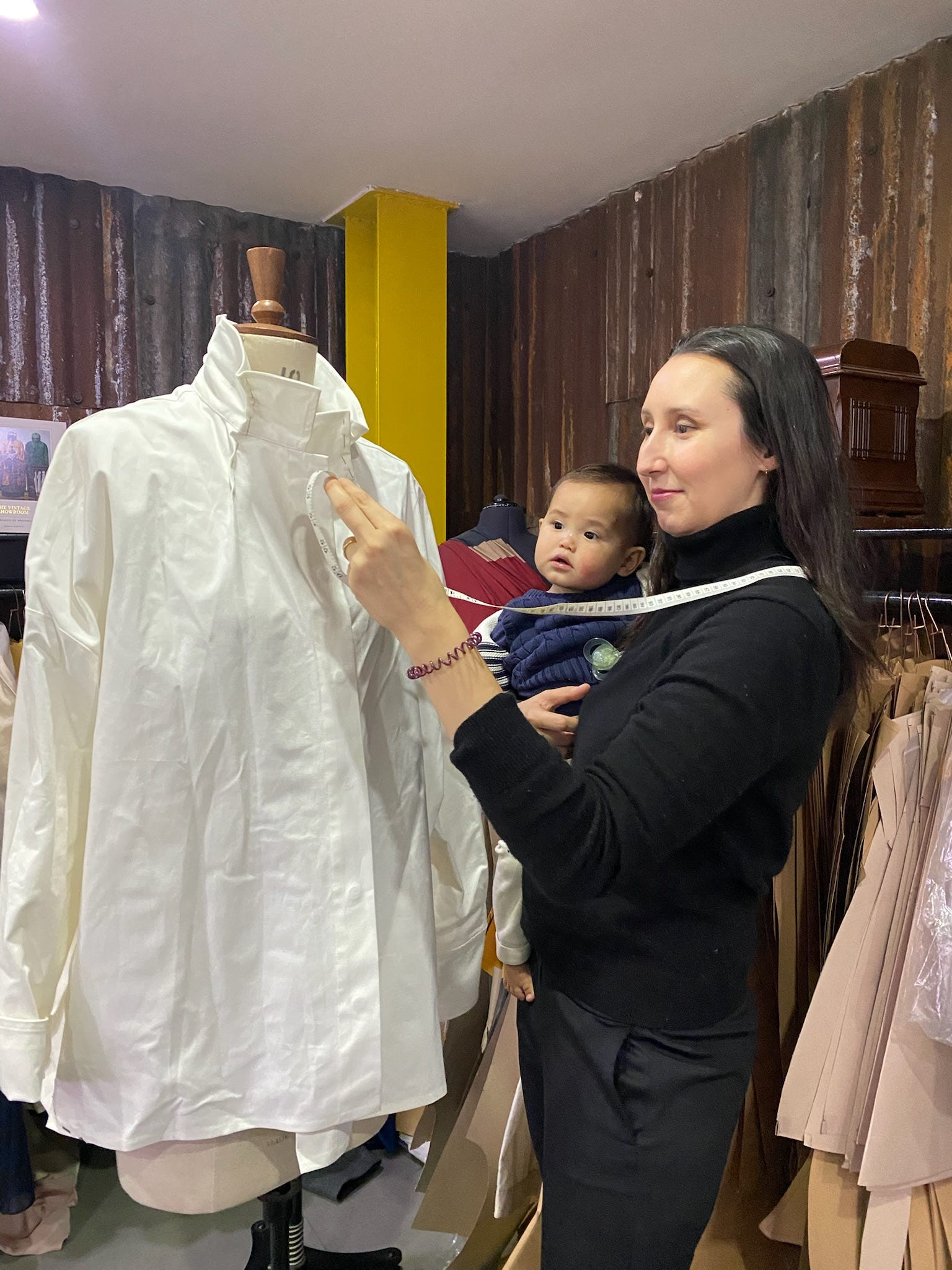
Founding The Female Archetypes, she set out to design adjustable clothing that adapts to real lives and real bodies, not the other way around. No longer do women have to choose between squeezing into last year’s clothes or feeling pressured to buy an entirely new wardrobe with every physical change. Instead, The Female Archetypes creates garments with thoughtfully integrated, hidden mechanisms that allow pieces to shift and adjust as our bodies do.
This goes against an industry built on rigid sizing and constant replacement. These designs acknowledge something women have always known: our bodies are not static. They evolve through work, stress, joy, pregnancy, postpartum, menopause, and everything in between. Alice believes clothing should be able to move through those changes with us, offering support, comfort, and confidence rather than restriction or shame.
So what?
Progress often starts by questioning what we’re told is “just the way things are” and testing whether there might be another way entirely. What Alice has learned through building her brand is that some of the most impactful decisions come from trusting instinct and lived experience and choosing to create something better because of it.
This doesn’t apply only to fashion. It can be true when your environment doesn’t fully believe in your idea, when established systems insist something isn’t possible, or when you’re told to compromise simply because “that’s how it’s always been done.” Listening inward, can feel unusual. But again and again, it’s that quiet conviction, rather than loud approval, that leads to meaningful change.
If this resonates, why not have a look (here) at our clothing designed to adapt to real lives, not unrealistic expectations. And let us know: Where in your own life are you still following rules that no longer serve you? Is there maybe a way we could be doing things better?