

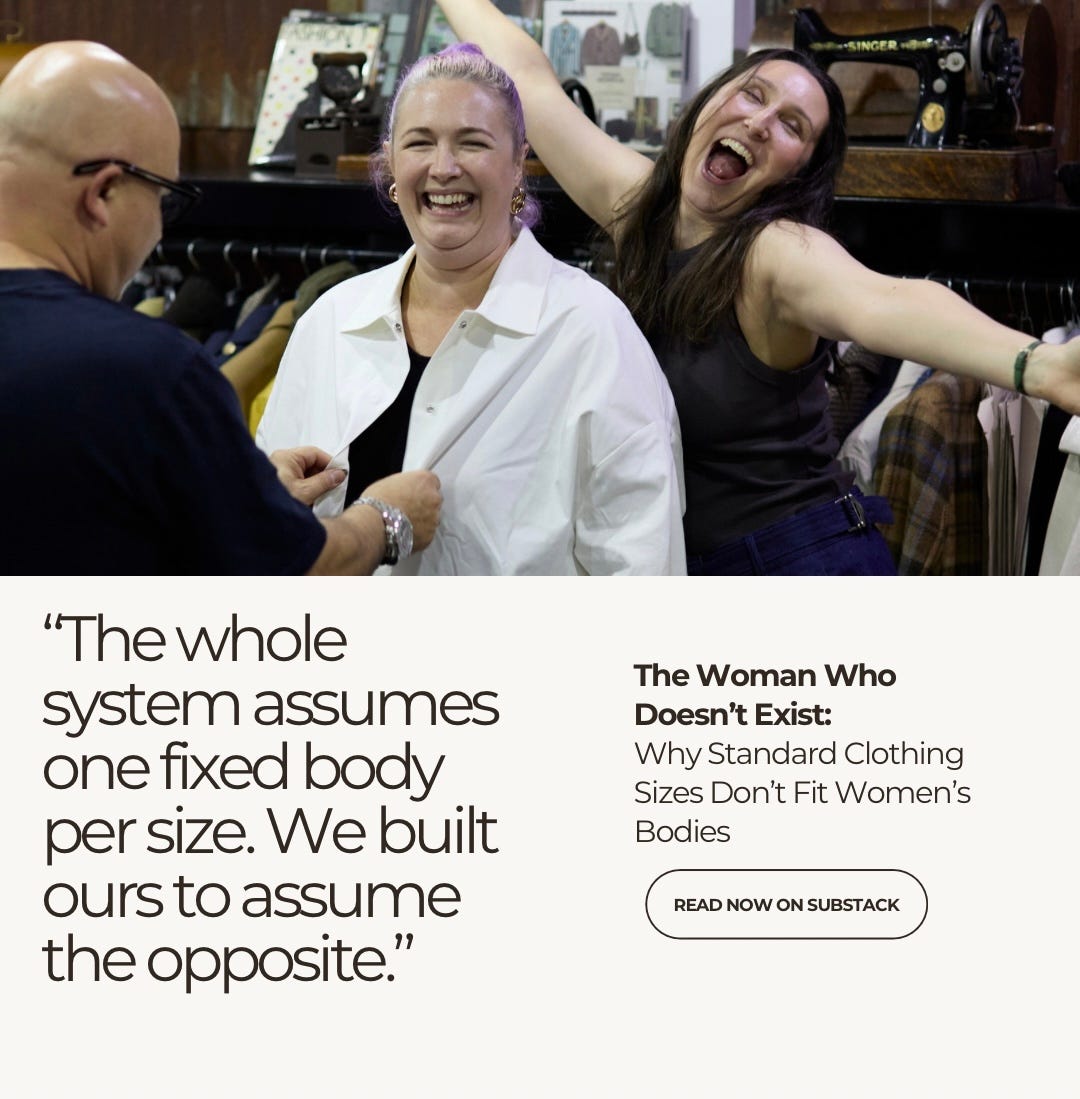
I’ve been a size 8. I’ve been a size 16. And through every single one of those sizes, one thing has stayed exactly the same: high street clothing has never fit me properly. Maybe I’ve just got unusual proportions. Maybe jeans are simply meant to sit slightly wrong on everyone, and we’ve all just accepted it. I genuinely don’t know. What I do know is that I have a tailor I trust just down the road, and my system for buying clothes is: get the tall version of everything, then have it shortened. Which does make you wonder, who the hell are these clothes actually made for?!
The Invention of the “Standard” Woman
Until the mid-20th century, most clothes were either custom-made or, more commonly, made at home, standardised sizes or off-the-rack clothing as we know it today did not exist. Most people bought one set of garments and very rarely bought new clothes. Most women even wore the clothes they already had, their “sunday best”, to their own weddings. According to Seamwork, “ready-to-wear” clothing only appeared in the 1800s, first for men’s military uniforms and eventually expanding into the domestic market.
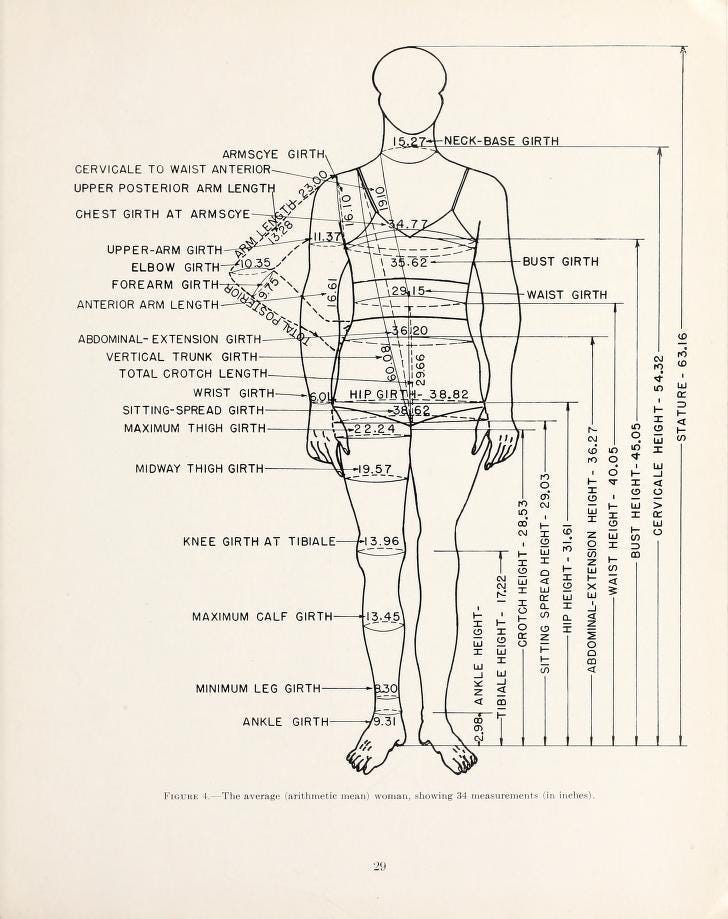
“Women’s Measurements for Garment and Pattern Construction”, Ruth O’Brien and William C Shelton, 1941, National Agricultural Library
In 1939, the US Department of Agriculture (USDA) measured nearly 15,000 women to determine what the average woman’s body looked like in a study called Women’s Measurements for Garment and Pattern Construction. Ryanne Pilgeram attributes this study to the rising number of women participating in agriculture in the United States and their previously unneeded demand for standardised uniforms. Another contributing factor was losses in the garment industry due to rising returns and poor fit. Because of this, the USDA studied the weight and 58 body measurements of 14,698 women across seven states in the US, including some very unusual measurements such as elbow girth and ankle height. Initially, the sizing settled on seven distinct body types requiring nine separate size combinations for a single measurement, which was completely impractical to manufacture.
Unfortunately, these measurements were skewed from the start. The women hired for the study were paid a wage for their services, so most of these measurements were drawn from working-class women, and their averages simplified diverse human bodies to fit factory-made vanity sizes. Moreover, Fashion Magazine points to a very narrow demographic in which women of colour were not even considered in these measurements.
Later down the line, in 1958, the Mail Order Association of America asked the National Institute of Standards and Technology to develop a standard sizing system for women’s bodies, which, with a few tweaks, resulted in the first set of so-called vanity sizes. Because of the complicated system proposed in 1939, a “standard” body was developed using data from servicewomen: women were given 32 sizes, ranging from 7 to 42. Of course, as Kathleen Fasanella points out, these women were among the fittest people in the country and, thus, an odd basis for a size chart meant to represent all women.
What the Hell is Grading?
So by 1958, the industry had its “standard”, a set of numbers built from an unrepresentative sample, smoothed into something that could be printed on a label and sold as fact. But a size chart alone doesn’t make a garment. To this day, someone still has to turn “size 12” into an actual pattern, and “size 16” into another, and most companies don’t want to redesign the garment from scratch each time.
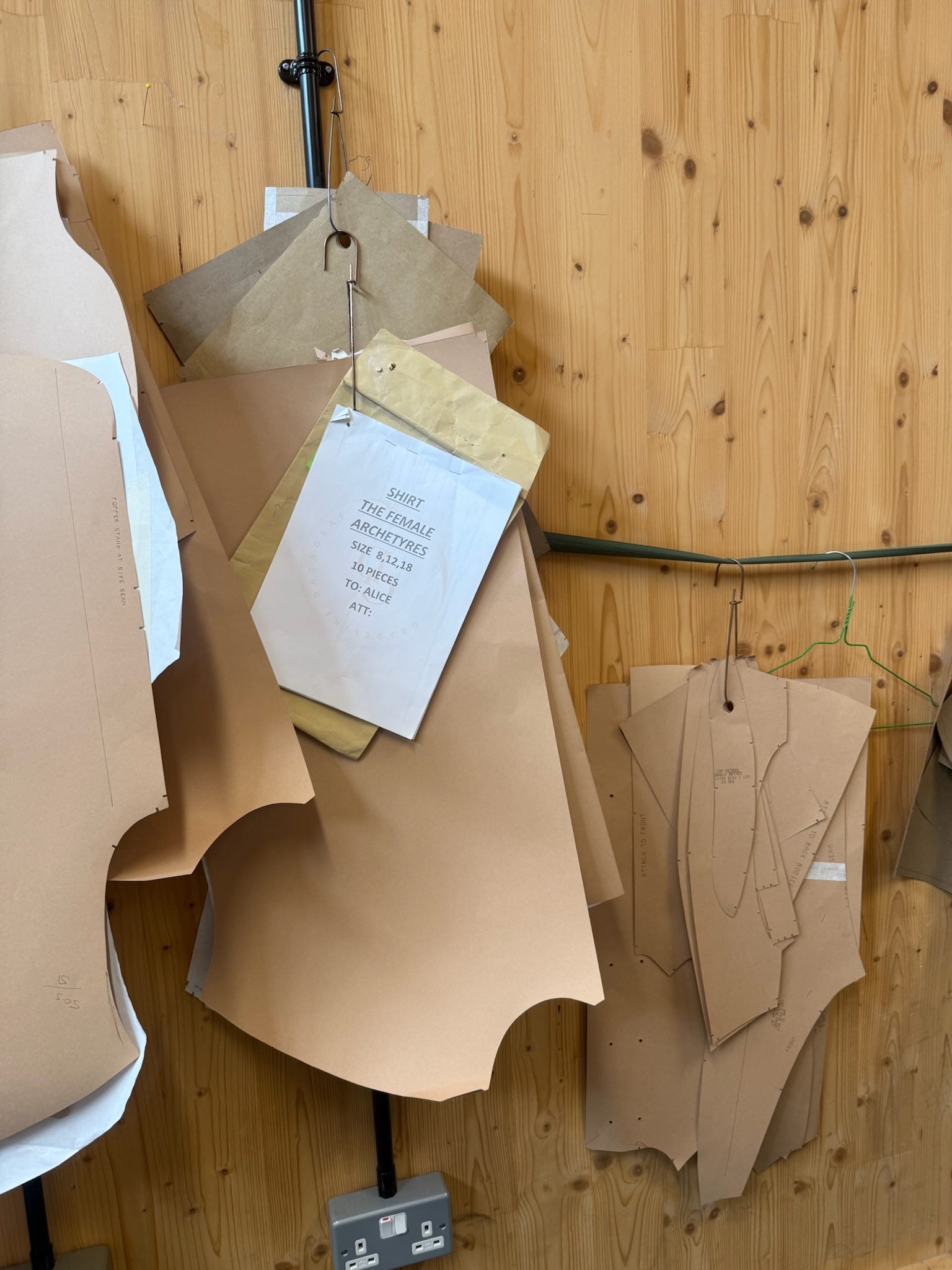
The Female Archetypes, Shirt Patterns
That’s where grading comes in: Grading is the process manufacturers use to take one perfected pattern, the base or sample size, and mathematically scale it up or down to produce every other size in a range, rather than designing each size individually. Grade rules are based on general body-measurement data such as those established in 1958, and determine exactly how much each point, chest, waist, hip, sleeve, changes from one size to the next.
As we all know, our bodies don’t grow uniformly in every direction. If we gain weight, our shoulders don't necessarily widen the way our midsection might. Shoulder width, hip circumference, and torso length all change at different rates. So grading has to be based on a set of assumptions about how the average body changes shape as it grows. Once again, our clothing is made for a “standard” that doesn’t really exist, it’s just an average, a mathematical extrapolation from a single sample body. We all know that one woman’s “size 12” and another woman’s “size 12” can look drastically different.
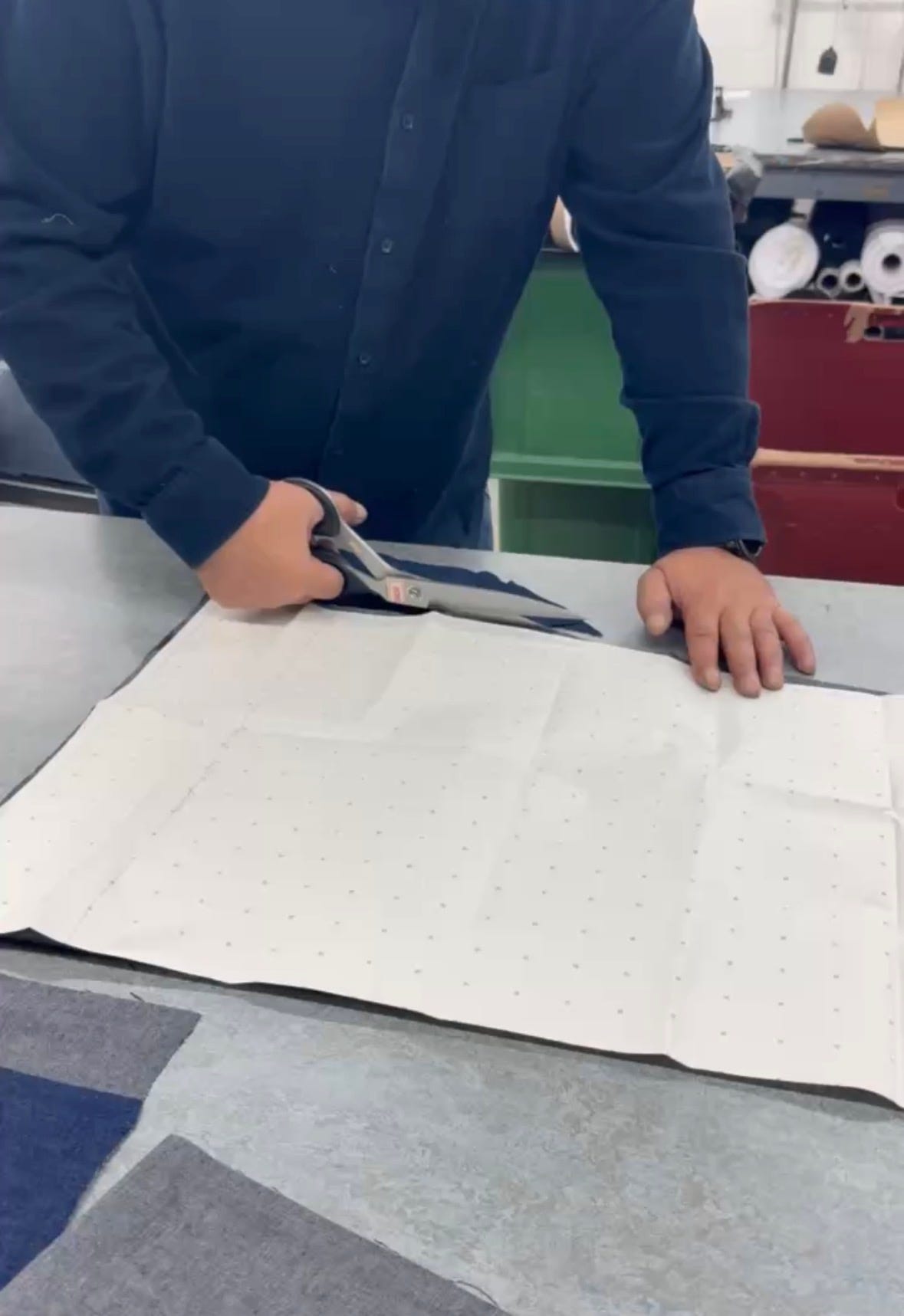
The Female Archetypes, Pattern Cutting
Moreover, standard practice in the fashion industry discourages grading more than two sizes away from the original pattern in either direction. Beyond that, the proportions no longer reliably reflect how a body that size is actually shaped. This means that the further you are from the sample size, the less the size chart's internal logic reflects how a real body at that size looks.
Since the 1950s, average sizing has shifted dramatically. According to Textile School, a 1958 “size 16” measured roughly a 28.5-inch waist, today’s equivalent is closer to 36 inches. Because of this, the original size standard was withdrawn in 1983, and brands have been setting their own arbitrary numbers ever since. And this is where our problem lies: The standard was never perfect to begin with, but at least it was consistent. Now a size 10 can mean something completely different at every store.
The Problem Was Never Your Body
So what’s the solution? At The Female Archetypes, we are tackling the problem in two ways. Firstly, we do something most companies (especially the ones with the resources to do it properly) don't: we fit our clothes on multiple models across our size range, rather than perfecting one sample size and grading everything else up or down from it. Our larger sizes are fitted to larger-fit models, not mathematically extrapolated from a smaller one.
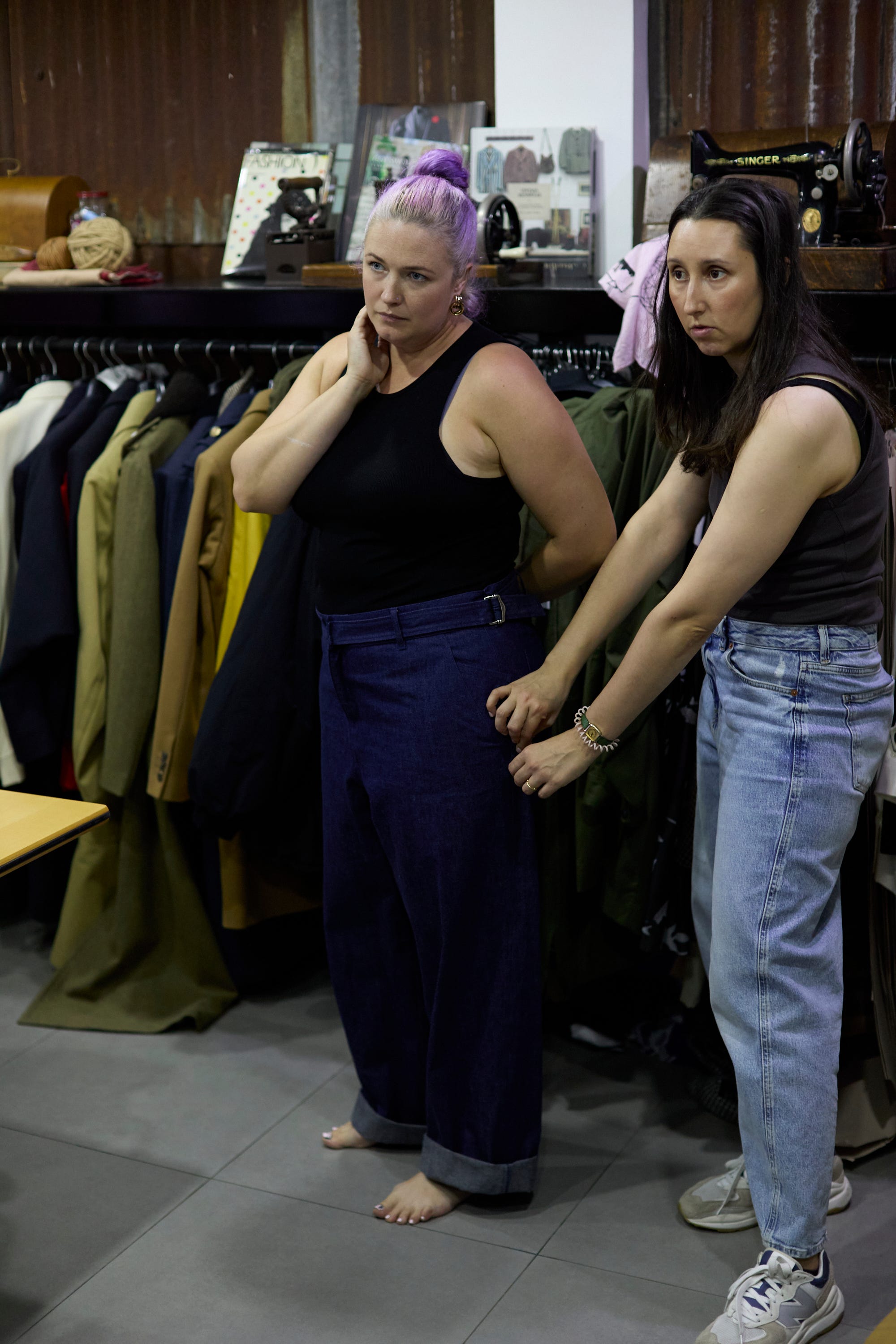
The Female Archetypes, Fit Session
Secondly, and this is the more crucial point, our clothes are built with adjustability in mind. Grading, or even multiple fit models, do not account for a body changing shape within a single day. It has no mechanism for a body that’s a different shape before and after lunch, on day 12 of a cycle versus day 24, six weeks postpartum versus six months. Perimenopause belongs on that same list, too. During perimenopause and menopause, the gradual decline in oestrogen is associated with real, well-documented shifts in body composition, including a tendency for weight to redistribute toward the abdomen. We rarely think to include this life stage in conversations about changing bodies. A size chart makes no distinction between any of this. It grades the same body, at every stage, as if none of it ever happened.
At The Female Archetypes, our clothes will adjust to your body exactly how you want them to fit, without having to battle a size chart.
Join our community: Instagram, YouTube, TikTok, LinkedIn
Written by Jasmine Niblett, 20.08.2026