

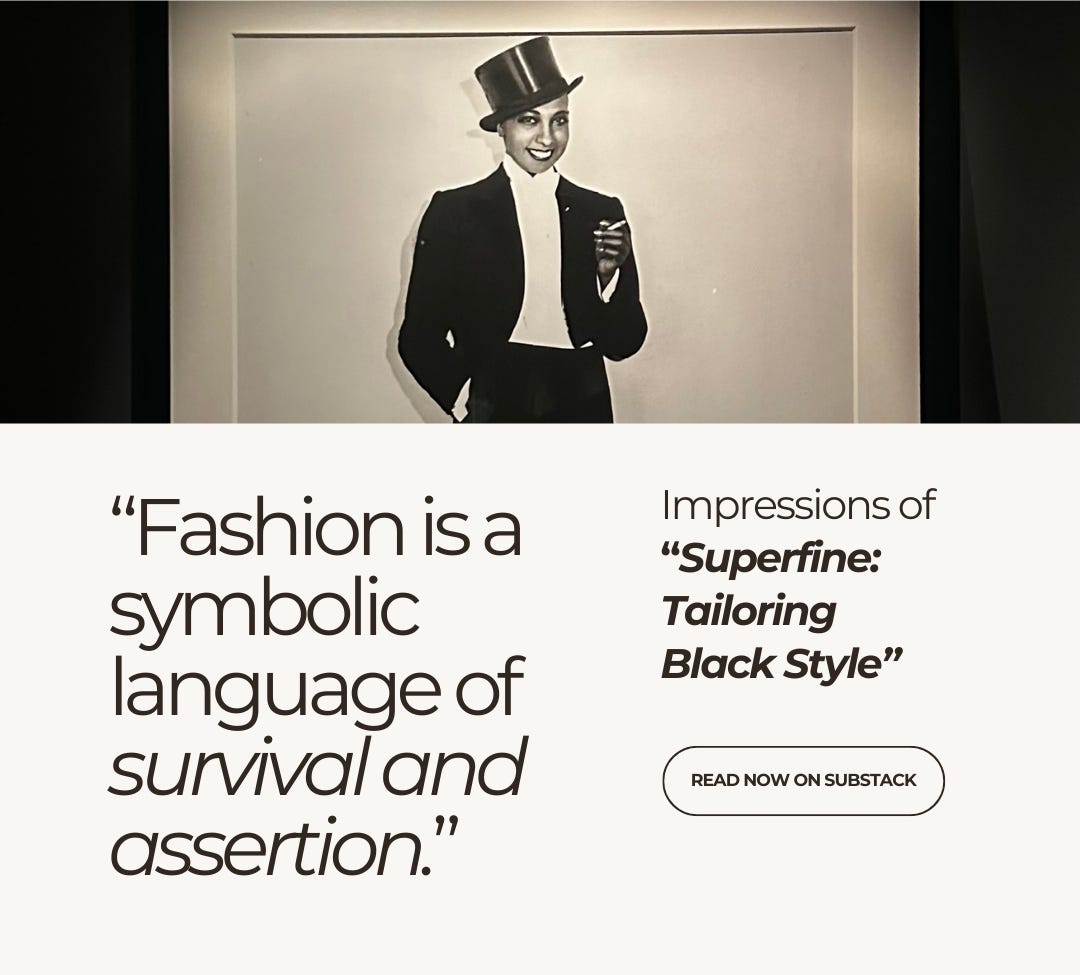
Teddy Piaz, Joséphine Baker, ca. 1932, “At once soignée and subversive, this picture of Baker in her sophisticated ‘cross-dress’ was widely circulated.”
When planning my trip to New York, the Metropolitan Museum of Art’s Costume Institute’s spring 2025 exhibition, Superfine: Tailoring Black Style, had been at the very top of my list. For one, it being New York Fashion Week, this was a great space for a quieter, more profound exploration of fashion. But more importantly, having looked into the exhibition prior to the Met Gala this year, I knew it would be both deeply inspiring and enlightening. Experiencing this collection in person, walking among the towering silhouettes and architectural structures, seeing the details of tailoring and ornamentation up close, added an immediacy that no catalogue or press release could convey.
Before I begin, I want to make it expressly clear that this is not a review; It would be inappropriate for me to rule on an exhibition of this nature. Instead, what follows are my impressions and the takeaways I believe are crucial to our brand and may be of interest to other designers and fashion enthusiasts alike. With this, I also want to acknowledge my perspective: I am a white-passing non-American woman who, as much as I have studied the themes of this exhibition extensively through an academic lens, will never understand the nuances of lived Black American experiences.
That said, Superfine: Tailoring Black Style presents a cultural and historical examination of Black style over three hundred years through the concept of Black Dandyism. The exhibition is aligned with the scholarship of guest curator Monica L. Miller, whose book Slaves to Fashion: Black Dandyism and the Styling of Black Diasporic Identity has shaped the field. It is also expressly dedicated to the late Virgil Abloh, who defined a Dandy in his Vocabulary according to Virgil Abloh as “the male aspiration to becoming uninterruptedly sublime”. Superfine is organised into twelve sections, each representing a characteristic that defines the style: ownership, presence, distinction, disguise, freedom, champion, respectability, jook, heritage, beauty, cool, cosmopolitanism.
Fashion as a symbolic language
At many points throughout the exhibition, the display echoes Jerry Lorenzo’s words: “dressing […] was not about self-promotion, but about self-preservation.” On some level, I am sure we can all relate to this sentiment. Clothing has the potential to hold and protect the self in a way few other media can.
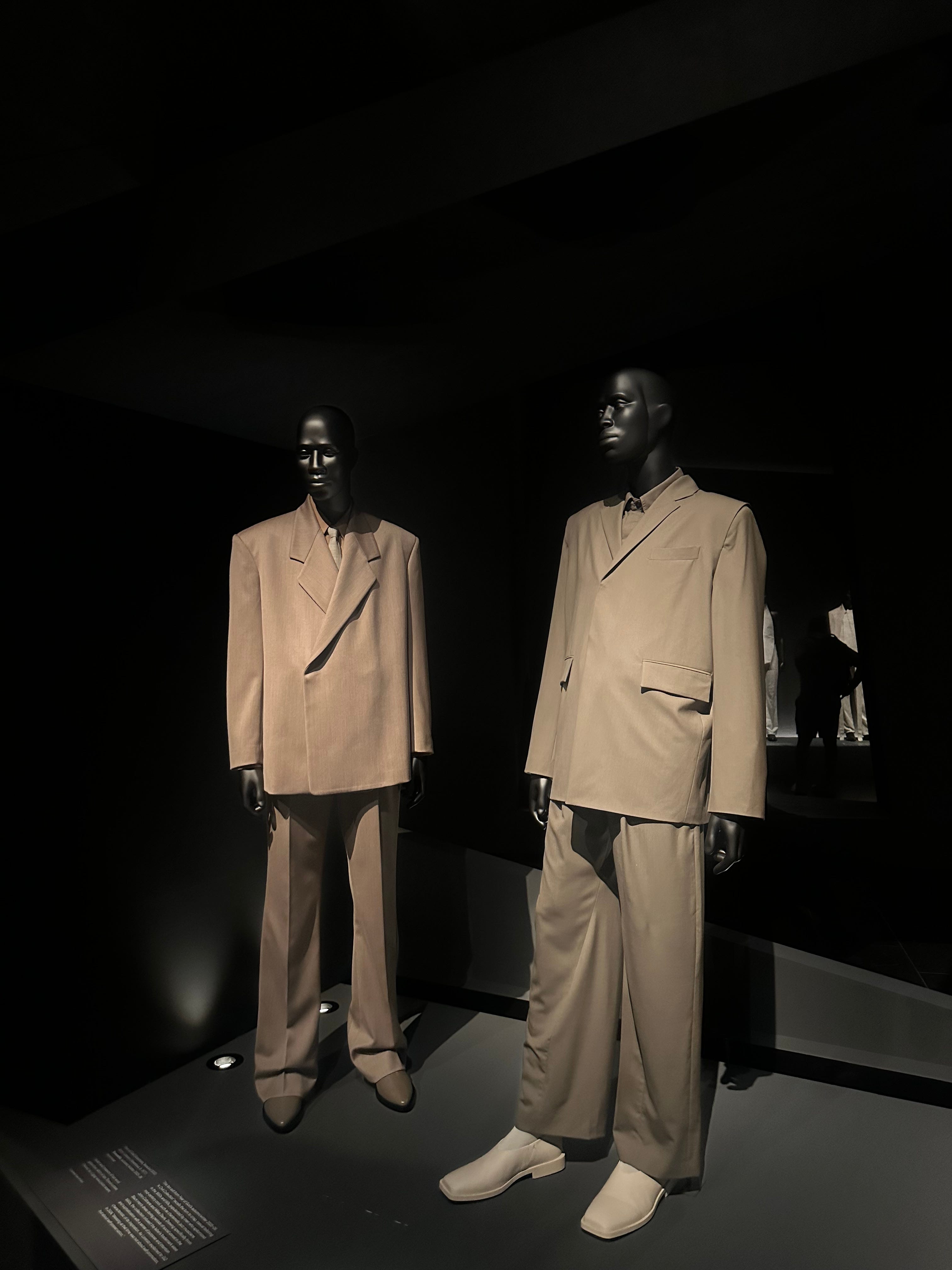
Bianca Saunders, “Pull-Over” Ensemble, autumn/winter 2022/23, "The jacket […] is cleverly structured as a pullover with snaps hidden at the front to create the illusion of a standard single-breasted suit jacket when closed.”
One piece that felt especially in keeping with this and resonant with our mission at The Female Archetypes was a tan suit from Bianca Saunders’ Autumn/Winter 2022–23 collection (see image above). Sarah Mower described Saunders’ designs as making “tailoring relevant to men in a casualised world.” The design demonstrates her interest in introducing comfort to tailoring, supported by her study of the ways fabric and garments reflect and adjust to the body’s movements. This resonates deeply with our work at The Female Archetypes, where we create adjustable clothing that fits every version of women’s bodies. The idea that tailoring can evolve with the body, rather than restrict it, is at the heart of our own mission and reflects the need to prioritise functionality in clothing without sacrificing style.
Despite this need for self-preservation rather than self-promotion, the exhibition continuously confirms the latter: Black Dandyism never sacrificed style. Fashion, as Abloh reminds us in his 2020 Manifesto, is part of what he called the Black Imagination, “creating an encouraging black consciousness for the present and the future.” This was especially relevant pre-emancipation but remains vital today. In his Exhibition Tour, Andrew Bolton, Head Curator of the Costume Institute, highlights the “liberatory quality of the Imagination itself.” This concept enables extravagance in fashion to not merely be indulgent, but a symbolic language of survival and assertion.
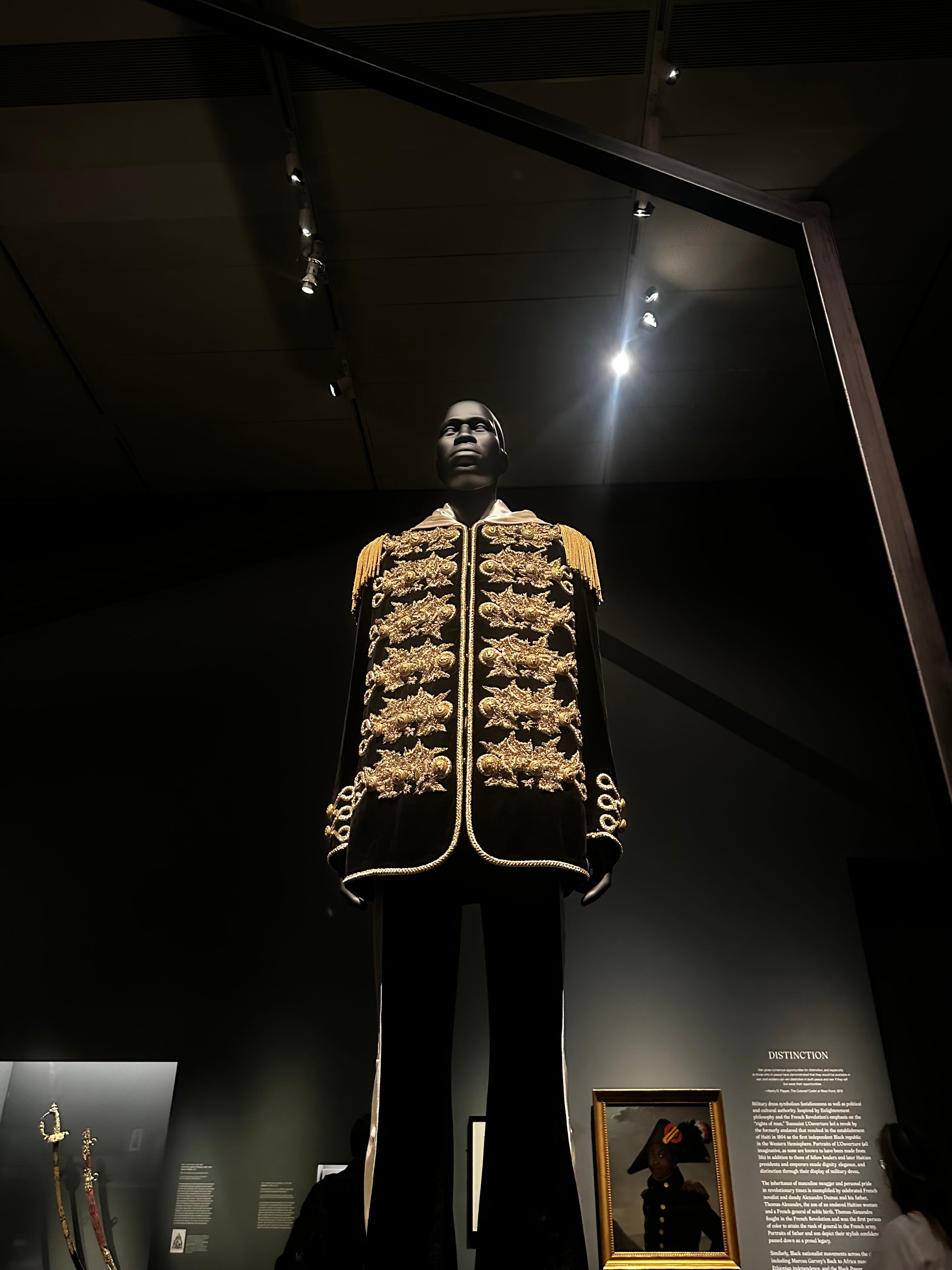
House of Balmain, Olivier Rousteing, Ensemble, pre-fall 2023, “The coat […] is Rousteing’s interpretation of the Veste Hussard, an early nineteenth-century French cavalry jacket with ceremonial gold braid.”
This idea is made powerfully clear in the first section titled “Ownership.” The curators describe it as exploring Black Dandyism’s relationship to currency and conspicuous consumption through material signifiers of gold and silver, and through garments and accessories trimmed with or seemingly made from these metals. The section shows how clothing can dehumanise but also grant agency and self-possession: “Dandyism, in turn, became a mode for Black people to subvert this degradation by claiming and visualising their own value and worth.”At a time when Black people were negotiating their status post-emancipation, style became a way to transform invisibility into presence, sometimes through the sheer boldness of personal fashion.
Connecting the past and the present
I love how the exhibition simultaneously carries the visitor through the history of Black Dandyism while also constantly referencing contemporary style. For example, the “Jook” section that explores the avant-garde fashion of jook (juke) joints, speakeasies, and cabarets between emancipation and the Harlem Renaissance, exhibited a few of the surviving pieces from this period alongside modern interpretations.
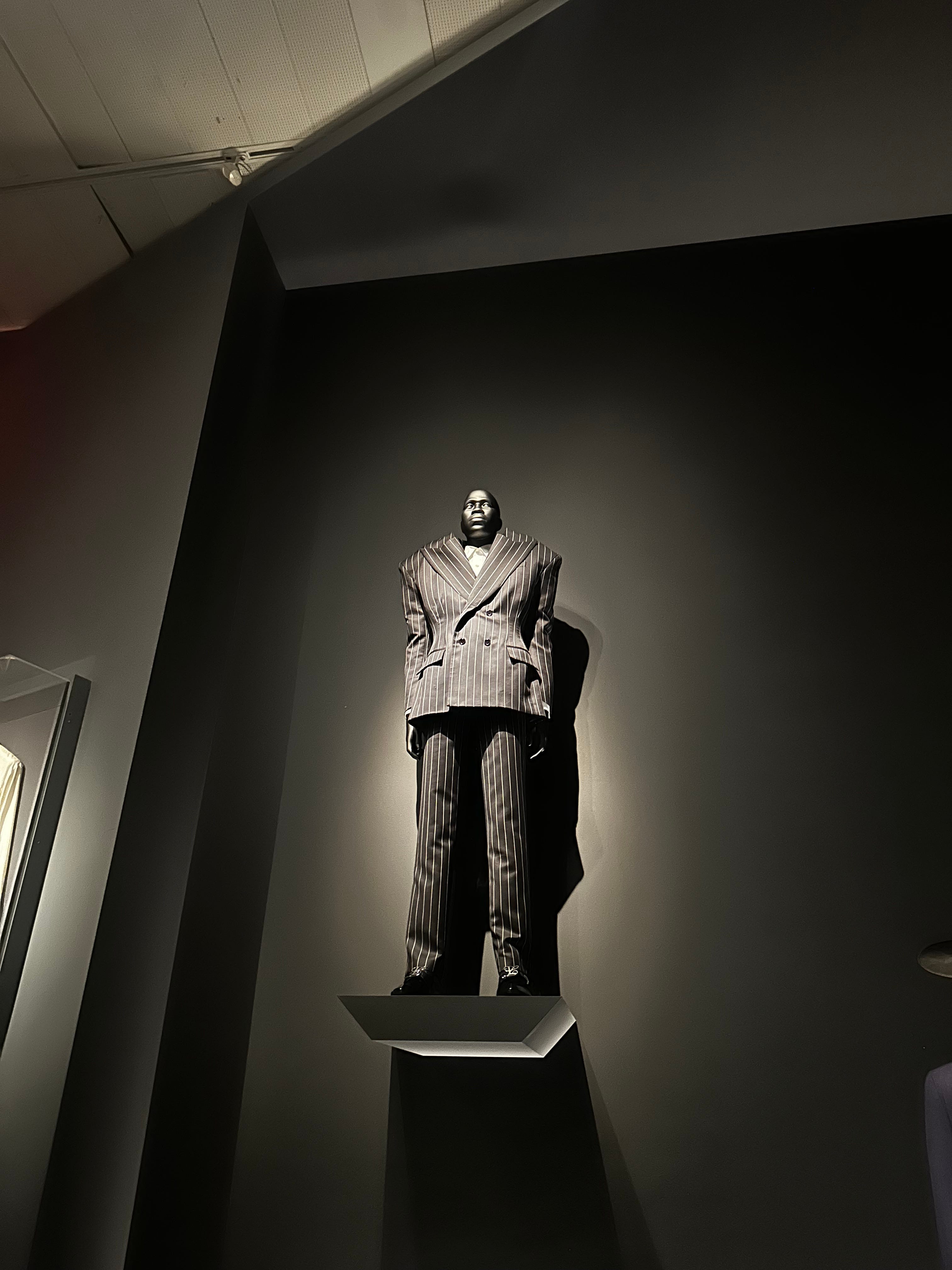
LUAR, Raul Lopez, Suit, spring/summer 2023, edition 2025, “The […] collection featured an exaggerated shoulder line Lopez dubbed the ‘boulder shoulder,’ reminiscent of the exaggerated zoot silhouette.”
The zoot suit emerged as a symbol of “transgression, joy and youth.” Willy Chavarria of The New York Times puts it beautifully: “The suit’s incredible aesthetic moved me deeply not only because of its ability to take up space through silhouette and style, but also because of its capacity to make powerful political statements primarily through visual means. Zoot suits somehow articulate who their wearers were or had the potential to be.” Malcom X famously found pride in wearing the zoot suit, while modern interpretations often exaggerate its features to highlight its transgressive nature.
Standing before one of the towering zoot suit displays, I felt this viscerally. Oversized silhouettes demand recognition; they take up space unapologetically. Without making too laboured a comparison, our oversized pieces at The Female Archetypes also serve this dual function in their own way. The fashion industry and society as a whole often expect women to squeeze themselves into tight, uncomfortable clothing. In contrast, our pieces offer comfort while defying the expectation that women must shrink themselves into silence or smallness
Subverting gender norms
The “Beauty” section shows how Black Dandyism has long drawn power from embracing femininity. Glitter, ruffles, bold colours, even Prince’s iconic blouse from his Purple Rain Tour (see below), all spoke to the ways beauty and femininity can be subversive tools of strength. To me, this reinforces one of the core truths our brand is founded on: every feminine archetype can be powerful in its own way. There is no single way to be a woman, or a man for that matter, and clothes should support self-expression rather than constrain it.
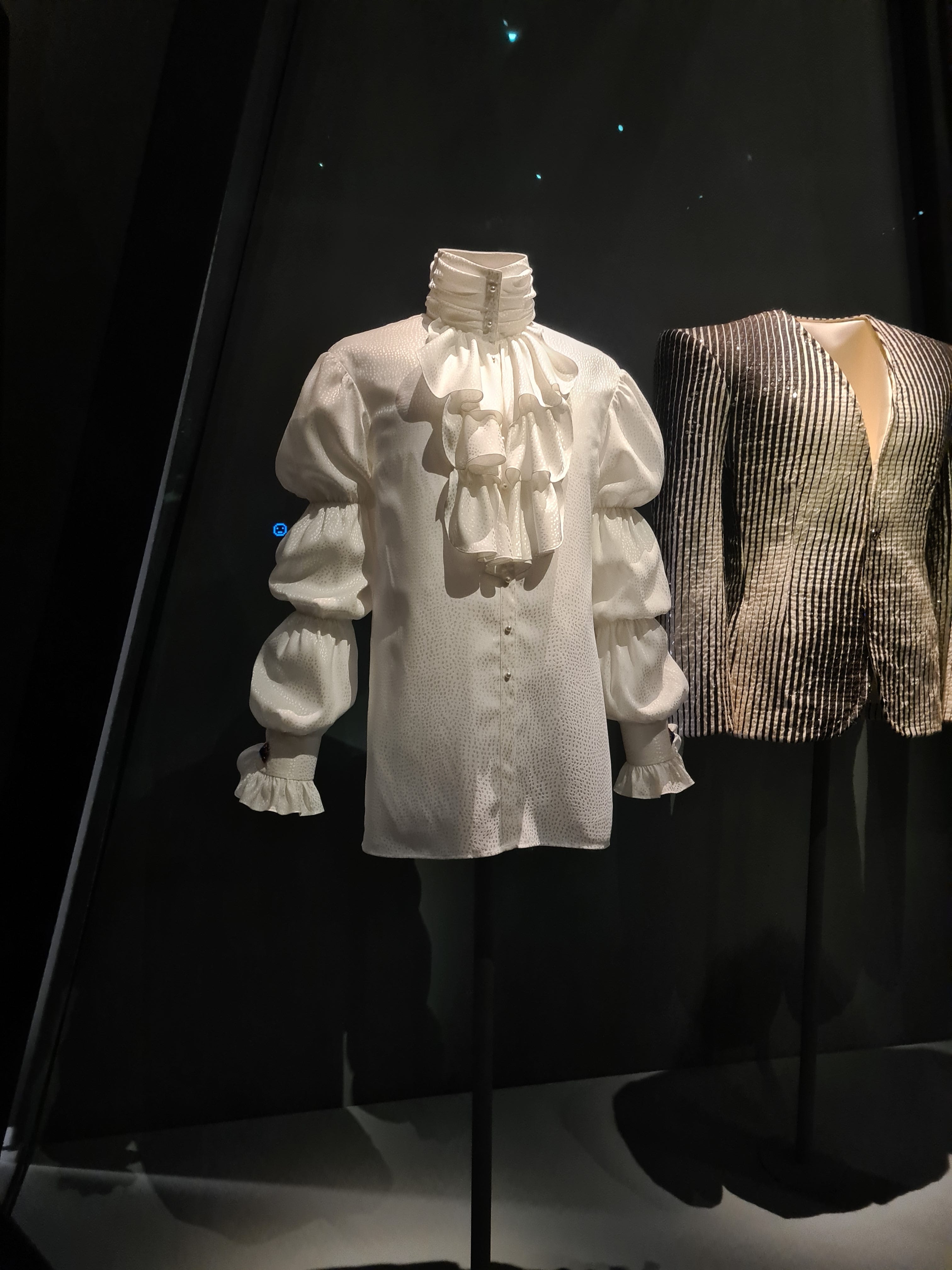
Marie France, Louis & Vaughn, Louis Wells, Vaughn Terry Jelks, Shirt worn by Prince, ca. 1984, “Straddling divisions of race, gender, and sexuality, legendary musician Prince used dress to disrupt expectations and push the boundaries of identity and artistry.”
Equally striking was the “Disguise” section. The curators noted: “Just as dress can be a form of concealment, it can also reveal a true self.” Ralph Kerwineo and Stormé DeLarverie’s use of traditionally male attire to manifest gender-nonconforming identities was both an act of survival and of expression. Contemporary garments in this section echoed fashion’s transformative role in crossing the boundaries of race, gender, sexuality, and class. Here too, I couldn’t help but think of our own tailoring, blazers and shirts that borrow the vocabulary of traditional menswear but imbue it with the comfort and adaptability women deserve.
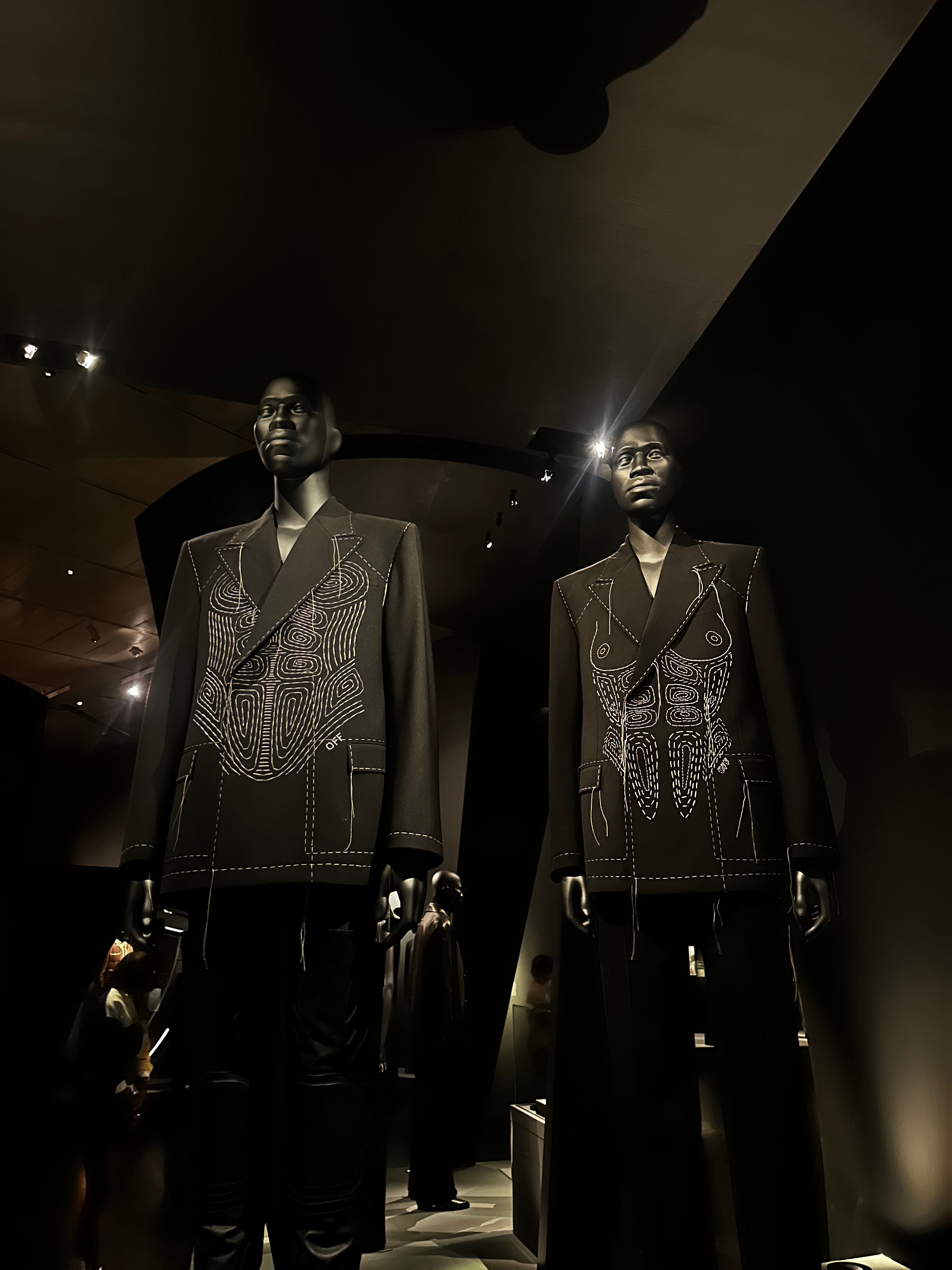
Off-White, Ib Kamara, Jacket and Suit, spring/summer 2023, “The jackets […] comment on the ability of standardised garments like the suit to conceal the identity and individuality of the wearer.”
Final reflections
Superfine is more than an exhibition. It is a meditation on how clothing carries identity, survival, and aspiration, how style can be both resistance and joy. Free with museum admission, this is an exhibition not to be missed if you are in New York.
For us at The Female Archetypes, it is a reminder that design is never just aesthetic. It is symbolic, imaginative, and political. And when we create clothing that adapts to women’s changing lives, we too proudly participate in this long lineage of fashion as a liberatory force.
Written by Jasmine Niblett 14.09.2025