

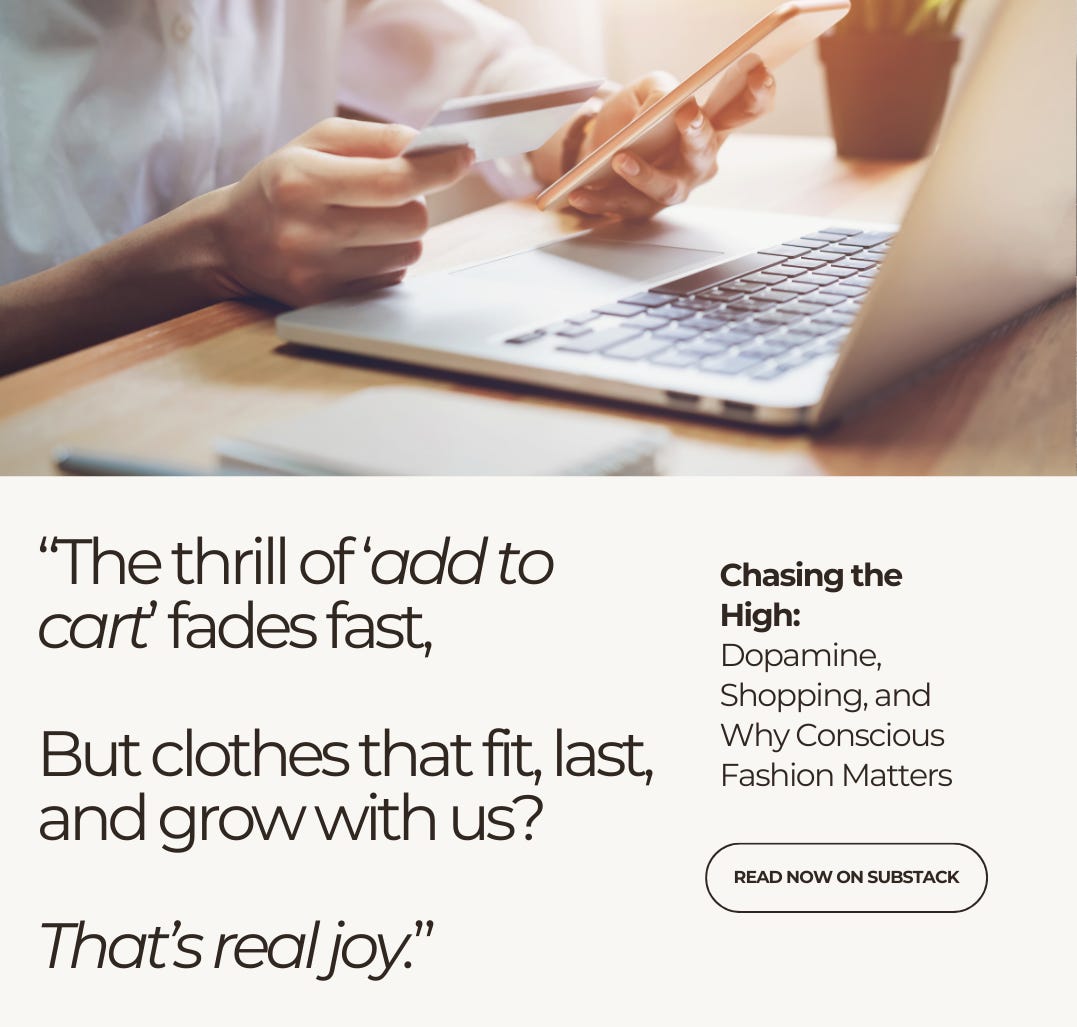
The other day, over what was supposed to be a casual Friday pub chat, my friends and I found ourselves deep in conversation about coping mechanisms. You know, those little habits we lean on when life feels overwhelming. We agreed on one thing: it’s frightening how easily an innocent crutch can turn into something our bodies start to expect.
I shared that online shopping had long been mine. The thrill of clicking “add to cart,” the anticipation of a parcel on its way, the unboxing, it was addictive in its own quiet way. And then? The high would vanish, usually as quickly as the clothes lost their shape. Lately, I’ve found an alternative that makes people laugh when I admit it: big Tesco. Yes, Tesco. For weeks, those grocery runs became my new “fix,” a tiny burst of satisfaction that cost a lot less than a fast-fashion haul, and honestly, my bank account was grateful. But it got me thinking: was I really addicted to shopping… or to the little dopamine hit that comes with something new? It turns out, the answer is less about willpower and more about brain chemistry, and what it teaches us about the way we consume fashion.
How Dopamine Fuels Our Shopping Habits
I decided to do a little research myself. That feeling of ‘something exciting is coming’ lights up the brain’s reward system, thanks to dopamine. Nowadays, there is a very prevalent myth that we can be addicted to dopamine itself. However, according to Crystal Raypole, this is not true: “Addiction is a complex brain disorder that doesn’t have a single, obvious cause. Dopamine plays a role, but it’s one small piece of a larger puzzle.” Contrary to popular belief, dopamine isn’t the chemical of pleasure; it’s the chemical of motivation. It pushes us to seek, to chase, to want. That’s why adding an item to your cart feels so good: the reward is coming, and your brain is buzzing with the thrill of expectation. The problem? Once the package arrives, that spike levels off, and we’re already looking for the next hit. The cycle isn’t about stuff, it’s about novelty.
According to John T. Maier, some kinds of neurodivergences, such as ASD or ADHD, are potentially linked to addiction. Sandra Silva suggests that “a strong case for the link between dopamine and ADHD symptoms is the fact that some ADHD medications work directly on dopamine levels and relieve ADHD symptoms.” Yet, a frustratingly large gap exists in the research, particularly when it comes to understanding how neurodivergence and dopamine-seeking behaviours manifest in women. In her Healthline article Silva provides lifestyle recommendations that, as someone who is neurotypical, I found very helpful in managing dopamine levels: ”trying something new as often as possible, making a list of small tasks and completing them to get a sense of accomplishment, listening to music you enjoy, exercising regularly [and] trying meditation and yoga.”
The Fast Fashion Trap
All this to say, the dark side of ‘retail therapy’ is real, not because we need more things, but because newness offers that quick burst of excitement when life feels heavy. For many of us, it becomes a quiet coping mechanism, a way to escape stress or boredom for a moment. And in today’s world, it’s easier than ever to indulge. Alternative payment methods like Klarna are great for making slow fashion clothing more accessible and can be a blessing for budgeting, but in the wrong hands, they can also be dangerous. For young people who’ve never had to navigate money management, buy-now-pay-later can turn a small comfort into a spiral of debt. The truth is, most of us aren’t filling a gap in our wardrobes when we click “add to cart.” We’re filling an emotional gap, chasing the little thrill of something new. The problem with this cycle is how quickly the magic disappears. When the package arrives, you get that rush, but it fades fast, especially when the clothes inside don’t fit the way you imagined, feel flimsy, or start losing shape after a single wash. I noticed that for myself, the high vanished as quickly as the clothes did. Fast fashion feeds dopamine’s love of novelty but never gives us the deeper satisfaction of something that lasts. It’s a short-term hit that leaves us reaching for the next one, over and over again.
Why Conscious Fashion Feels Better
The truth is, clothes that last bring joy that lasts longer. At The Female Archetypes, we believe fashion should give you more than a fleeting thrill; it should grow with you, adapt to your life, and keep earning its place in your wardrobe. That’s why our designs are adjustable, versatile, and built to last, so you can style them in countless ways without needing to constantly buy more. Interestingly, the same strategies Silva recommended for boosting dopamine naturally also apply to how we approach fashion: I find that finding a new way to style one of my favourite pieces gives me a great rush. Ironically, even organising or decluttering my wardrobe and rediscovering old favourites gives me that sense of accomplishment, a hit of joy in itself. Conscious consumption isn’t about never shopping; it’s about choosing pieces that give you lasting satisfaction, rather than chasing the short-lived rush of fast fashion.
The thrill of “add to cart” fades fast, but clothes that fit, last, and grow with us? That’s real joy. Fashion should be more than a quick fix; it should be something that keeps giving you those little sparks of excitement every time you wear it. That’s what we create at The Female Archetypes: pieces that adapt to your body, your life, and your many versions of womanhood.
Written by Jasmine Niblett, 24.08.2025