

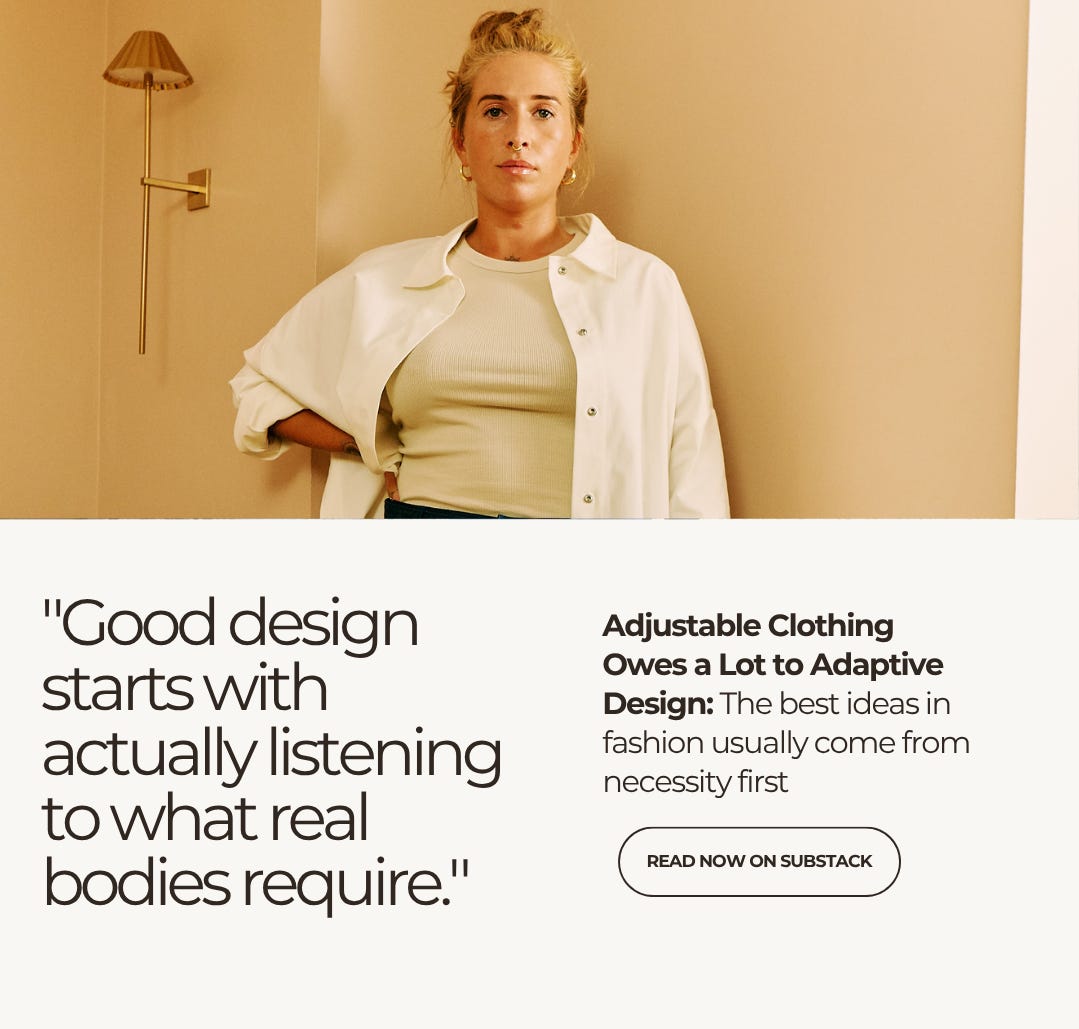
Alice built The Female Archetypes because she saw a real gap: women needed adjustable clothing that moved with their bodies without sacrificing a polished look. For years, that meant leggings and wrap dresses were often the only real options - comfortable, forgiving, but rarely something you could wear to a client meeting and dinner afterwards without changing.
If you’ve ever searched “adjustable clothing” online, you’ve probably come across “adaptive clothing” too. People use the two almost interchangeably, but they’re inherently different. And adjustable clothing, as a category, owes a real debt to the people who fought to make adaptive clothing exist in the first place.
Every Body Has Different Needs
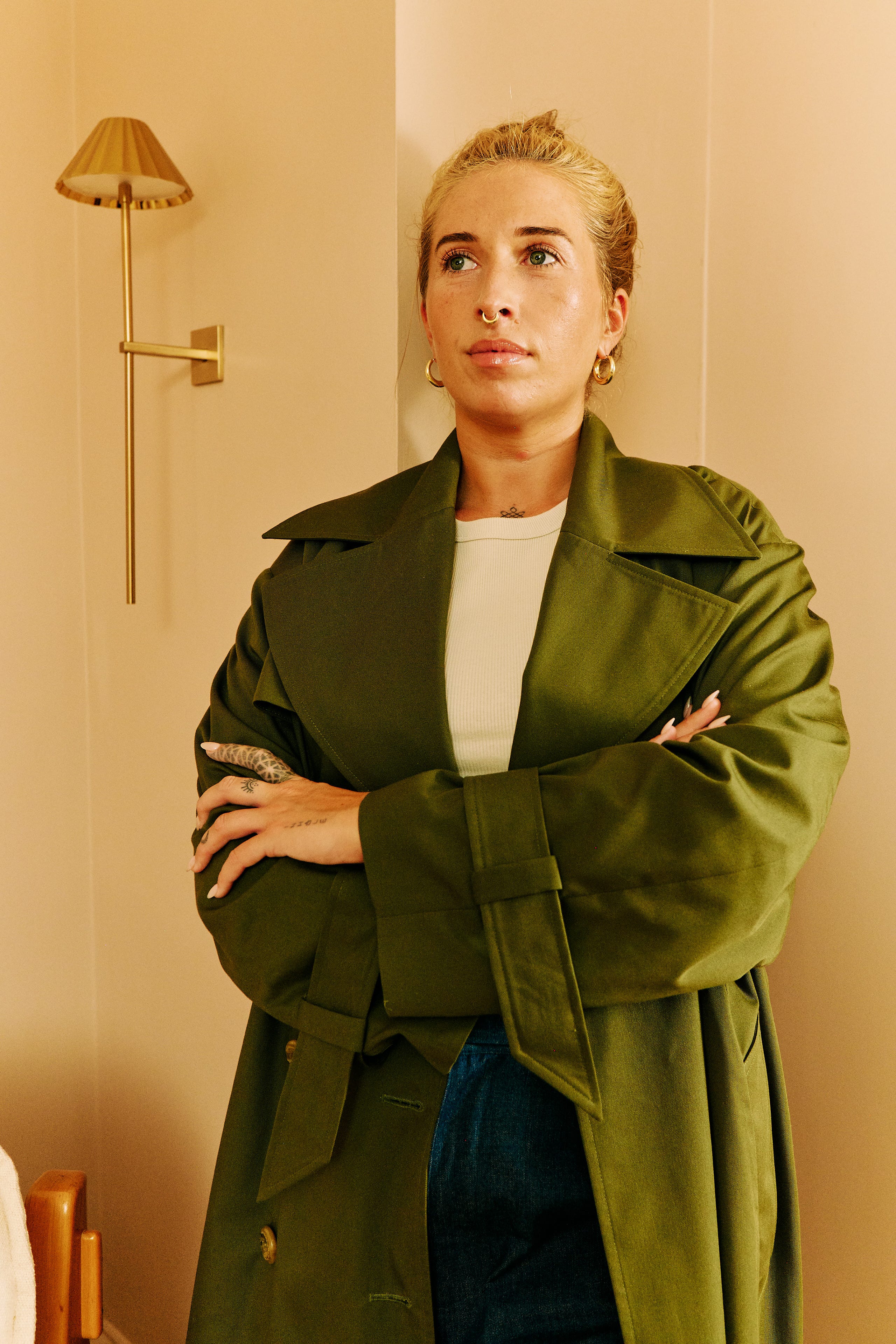
While building The Female Archetypes, our founder, Alice, has had the privilege of working with and exchanging ideas with people who rely on adaptive clothing daily, including cancer patients and stroke survivors. Those conversations shaped how she designs our clothes, because good design starts with actually listening to what real bodies require. As Tameka Ellington and Stacey Lim contend, non-disabled people often render people with disabilities helpless before actually getting to know their capabilities. That is why open dialogue matters: it creates a better environment for everyone, whether they are disabled or non-disabled.
A couple of weeks ago we wrote about the advent of standardised clothing sizes, and really this story is just part and parcel of the same issue. Clothes used to be adapted to everyone individually. If you made your own clothes, or had them made, they fit the way you actually needed them to. Emma Butler, founder of the adaptive underwear brand Liberare, has described how clothing was once designed more like a flexible system than a fixed outfit, tied rather than buttoned, wrapped rather than rigidly closed, layered so it could loosen or tighten depending on pain, swelling, or the weather. What we now call “adaptive” wear was, for most of history, simply how people got dressed.
Of course, modern fashion and medical technology have brought us a lot that people pre-standardised clothing couldn’t have dreamed of. For example, moisture-wicking materials that help manage body temperature or specially engineered seams to prevent pressure sores in seated individuals. But the underlying point hasn’t changed: we’re now largely expected to fit our bodies into one standardised set of options, when every body is different, and even one body’s needs can change from day to day
What is Adaptive Clothing?
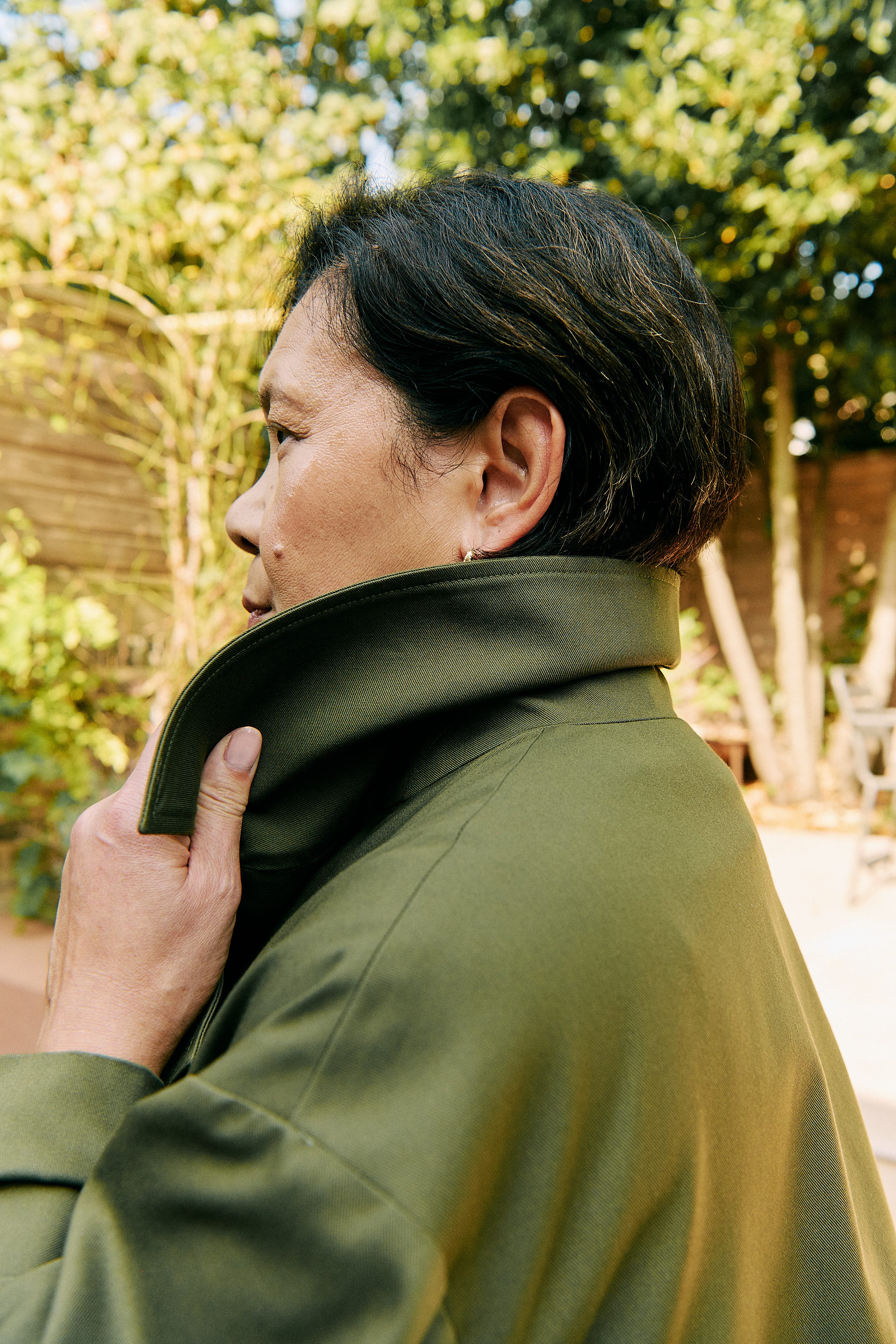
Adaptive clothing is designed around specific physical access needs and built for people with disabilities, whether congenital, acquired through injury or illness, or related to ageing. It’s not one single design approach, because the needs it serves aren’t singular or the same for everyone.
In practice, that means features like magnetic or Velcro closures instead of buttons, for people with limited hand mobility or dexterity. Flat, seam-free construction for anyone who needs to avoid pressure points or catching fabric. Side-opening or seated-specific cuts for wheelchair users. Sensory-friendly fabrics and finishes for people with sensory processing needs. Designs that make it possible to dress independently, or that make dressing with a carer’s help easier and more dignified.
Each of these features exists because it solves a problem that traditional clothing hasn’t addressed, and options for people with disabilities remain genuinely limited. Advocates and designers within the disability community have spent years pushing an overlooked category of fashion forward, often because mainstream brands weren’t asking people with disabilities what they actually needed. Blake Reid even points out that, in some cases, products initially designed for disabled users have become inaccessible because they have become too beneficial for non-disabled customers.
Adjustable vs. Adaptive Clothing: What's the Difference?
At The Female Archetypes, our clothing adapts to any body that changes shape: across a single day, across a menstrual cycle, across pregnancy and postpartum, across the decades of a life. For example, our Adjustable Waist Jeans’ waistbands use a pleat-and-popper system designed to open and close gradually as your body shifts. There is no elastic in sight, and especially nothing that reveals you’ve had to size up or down.
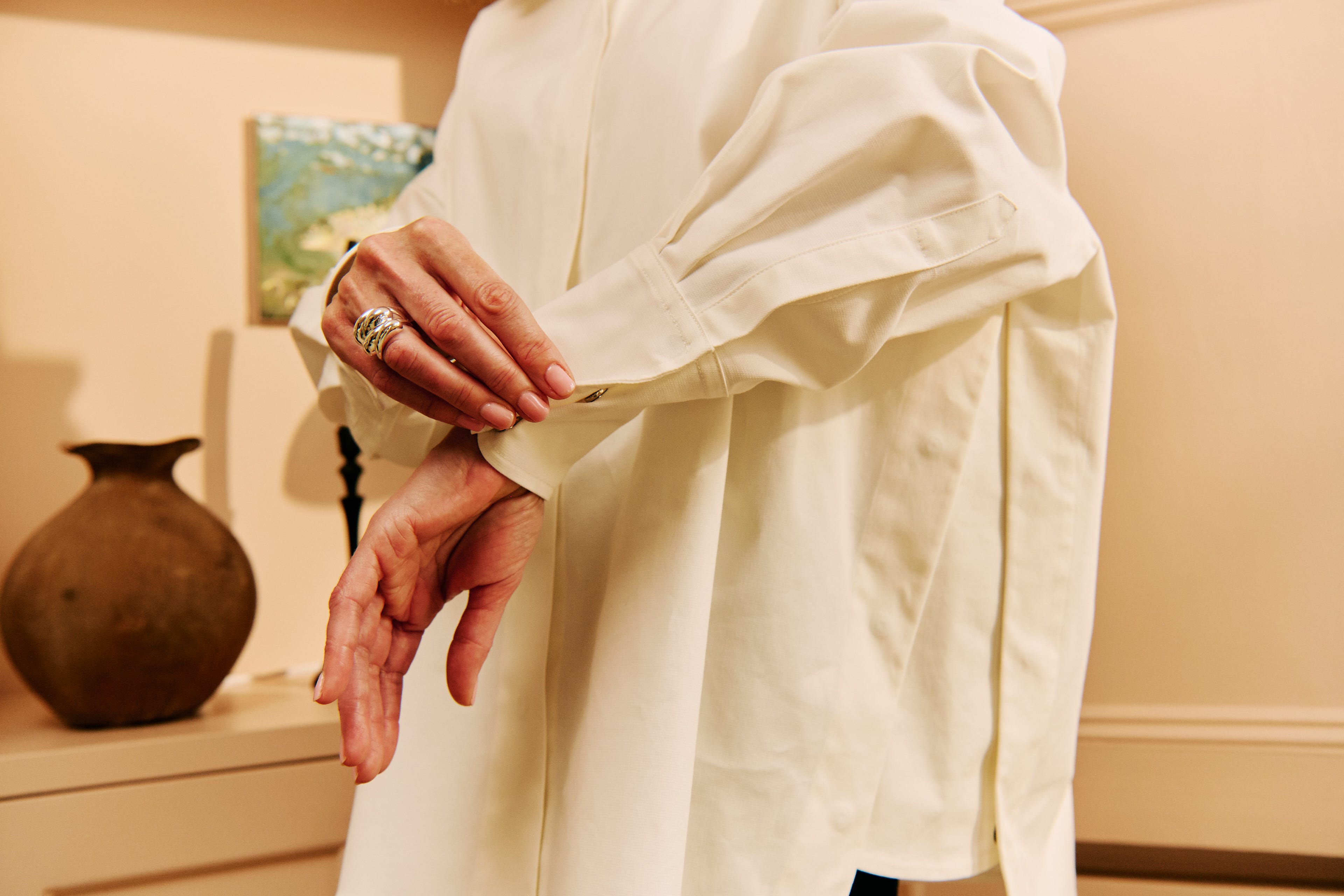
It’s not just the waistband, either. Our poppers, like those on our Adjustable Size Overshirt, were chosen with dexterity in mind from the start, easier to manage than small buttons for anyone who finds fiddly fastenings difficult, whether that’s from arthritis, limited grip strength, or simply hands that are full or tired. And our back-neck labels are made from a soft, low-irritation material rather than the usual printed or woven tag, since a hard label rubbing at the back of the neck can be a genuine problem for anyone with sensory sensitivities, not just a minor annoyance.
None of this makes our clothes adaptive clothing. But it does mean the thinking behind adaptive design, starting with what a body actually needs, not what’s easiest to manufacture, runs through more of what we make. Ultimately, you can wear our clothes from the school run to a client meeting to dinner after, without thinking about what your body’s doing in between. Before lunch, after lunch. Day 12 of your cycle, day 24. Six weeks postpartum, six months on. The fit moves with you, not the other way around.
As adaptive or adjustable design features get picked up by large, mainstream clothing labels, disabled designers and disabled users are often erased from the story, their role as originators and inspiration replaced by brands claiming the innovation as their own. Adjustability, as a category, is partly inspired by and indebted to work that disabled designers and advocates did first. We didn’t invent the concept of clothing that responds to the body wearing it. We’re building on ground that others cleared first.
Adjustable clothing is definitely not a replacement for adaptive clothing, and it never should be presented as one, we don’t claim to solve for physical access needs. But if any part of what we’ve built makes getting dressed easier for someone who needs it to be, disabled or not, we’d rather that be an honest continuation of work that started somewhere else, not a rebrand of it.
Join our community: Instagram, YouTube, TikTok, LinkedIn
Written by Jasmine Niblett, 10.09.2026